Houston heat is generous to a pool, but hard on a pump. Sun-baked pads, heavy pollen in spring, silt after thunderstorms, and long swim seasons add up to more runtime, hotter motors, and a higher chance of performance hiccups. By the time we arrive at a backyard in Westchase, Katy, or the Heights, we’ve seen the same handful of problems show up in slightly different clothing. The good news: most issues announce themselves if you know how to read the symptoms. The better news: a measured repair approach can often restore efficiency without rushing into a full replacement.
This guide distills what our techs at Texas Pool Butlers look and listen for during pool pump repair in Houston homes. You’ll find practical checks you can do yourself, the warning signs that call for a pro, and context about how our climate changes the playbook.
Why Houston’s climate and water conditions stress pumps
Heat matters. A single-speed pump running eight to ten hours on a 98-degree day sits in a little oven next to concrete that holds heat well into the night. Bearings run hotter, motor windings see more thermal cycles, and capacitors dry out faster. A variable-speed pump reduces that strain, but even then, summer runtime tends to creep up.
Then there’s the water. Many neighborhoods around Katy and Cypress deal with high calcium in make-up water. That drives scale inside heater exchangers and can leave deposits on impellers. Add pollen blooms and fine dust after a Gulf storm passes, and your filter loads quickly. A clogged filter increases back pressure, which lowers the pump’s flow and can lead to cavitation at the eye of the impeller. The result sounds like gravel in the pump basket.
Finally, the power grid. Summer brownouts and brief outages can trip breakers and knock pump timers out of sync. After the 2021 freeze, we still see equipment with hairline cracks in lids and unions that never showed up until a hot day expanded everything just enough to draw air.
What the noises are telling you
A pump that once purred but now complains is doing you a favor. Tonality is a clue.
A high-pitched whine that rises with RPM usually points pool repair katy tx to bearings. You might notice a faint metallic smell near the motor housing and, in severe cases, a little dusting of rust near the rear cap. Bearings wear faster in Houston if the pump sits in standing water after heavy rain. We’ve pulled motors from Memorial-area pits that held an inch of water for days. If you cannot keep that pad dry, consider raising the pump a few inches and improving drainage.
A grinding, marbly rattle often means the pump is cavitating. That can be due to a clogged pump basket, a filter overdue for a backwash or clean, or a partially closed suction valve. We see this most after a windy week, when the skimmer basket fills with palm strands and acorns. The pump cannot pull enough water, so vapor bubbles collapse inside the volute and the sound turns ugly.
A rhythmic chuff, almost like the pump is breathing, suggests air is leaking into the suction side. On a clear lid, you may see a vortex spin above the impeller. On opaque lids, you’ll notice inconsistent pressure on the filter gauge and spurts from returns.
Squeal on startup, then normal operation after a second or two, points to a weak start capacitor in a single-speed or two-speed motor. Once it gets going, it behaves, but starts become inconsistent. A week later the motor may fail to start altogether, humming until the thermal switch trips.
Low flow, dead spots, and cloudy water
Homeowners first notice a pump problem when water quality slides. You vacuum, you brush, and yet a milky haze lingers in the deep end. If you look closely, returns may feel weak. On a sand or DE filter, the pressure gauge may read lower than your usual baseline, not higher. That often means the pump is not pulling enough water, not that the filter is clogged.
We keep baseline notes on every pool we service in Houston and Katy: filter pressure clean vs dirty, pump RPMs and flow for variable-speed units, and normal vacuum suction feel. If you have a simple log, even on a sticky note inside the timer box, you can spot drift early. A drop from 14 psi to 9 psi on the same pump speed, with weak returns, suggests air or a restriction on suction. A rise to 22 psi beyond your normal clean figure means the filter needs attention.
Cloudiness also spikes after big swim parties in summer. If you run tablet feeders hard, cyanuric acid can creep past 80 ppm by late season and reduce chlorine efficiency. The pump gets blamed, but the chemistry is the culprit. In these crossovers between water balance and hydraulics, a seasoned tech reads both.
Five quick checks before you call for pool pump repair in Houston
- Peek through the pump lid and confirm the basket is clean and seated correctly, with the tab locked in its groove. Check the water level in the pool. It should sit halfway up the skimmer mouth, especially in August when evaporation runs high. Open the air relief on the filter to purge trapped air, then watch the filter gauge. Compare to your normal clean pressure. Inspect the pump lid O-ring for nicks, flattening, or grit. Lubricate lightly with silicone-based lube, not petroleum jelly. Walk the suction line from skimmer and main drain valves to the pump. Hand-tighten unions and look for drips or salt crust that hint at leaks.
These five take three to five minutes and solve a surprising number of calls. We never mind arriving to find a homeowner already did this, because it sets a shared baseline.
Air leaks, priming trouble, and that stubborn vortex
Houston’s hot, dry afternoons shrink O-rings and warp marginal lids. If you see a whirlpool in the pump pot, air is getting in on the suction side. Common spots include the pump lid seal, drain plugs on the bottom of the housing, the union just before the pump, and hairline cracks on the pump pot itself. On older equipment, the threaded fitting glued into the pump’s suction port can loosen as the PVC expands and contracts. A quarter-turn from a strap wrench can sometimes reseat it, but if the threads are compromised, the fix is to cut back and replace with a new fitting, set true and square.
Priming problems spike after a drain-and-clean, a leak repair, or a long outage. If the pump sits above water level, it relies on good seals to pull water uphill without sucking air. Variable-speed pumps complicate this. Many are programmed to start at a low RPM to save energy. That is fine once primed, but too slow to establish prime from dry. For those systems, we program a short high-speed priming phase, 3 to 5 minutes at 3000 to 3450 RPM, then step down.
If your pump refuses to catch, a gentle hose feed into the pump basket can help. Fill the pot fully, snug the lid, open the filter’s air relief, and give it a minute at high speed. If you still hear slurping, you have a suction-side leak to find and fix.
How to safely prime a pump after it has run dry
- Turn off power at the breaker, not just the controller. Safety first. Remove the pump lid and fill the basket housing completely with water. Clean and reseat the basket. Inspect and lube the lid O-ring, then secure the lid snugly. Do not overtighten. Open the filter air relief. Restore power and run the pump at high speed until a steady stream of water exits the filter relief. Close the air relief and monitor the pump pot. You should see little to no air after a minute. If air persists, recheck for leaks.
If the pump overheated and shut down earlier, give the motor 20 to 30 minutes to cool before retrying. A thermal protector lives inside most housings and needs time to reset.
Leaks, seals, and the wet pad that never dries
Water under the pump can come from two places: suction leaks that drip only when the system is off, and pressure-side leaks that spray or drip while running. A white, crusty trail near the seam between the motor and the wet end usually means the shaft seal is failing. This seal lives around the motor shaft behind the impeller and keeps water from entering the motor. Saltwater pools are harder on these seals, and power washing the equipment pad often pushes grit into them.
We see seals fail faster when pumps pull heavy granular shock through the basket. If you must add chemicals through the skimmer, dilute first, and run the pump for ten to fifteen minutes afterward at a moderate speed. Better yet, broadcast away from the skimmer or use a liquid feeder.
Union leaks after freeze repairs are a story we know too well. Quick fixes in 2021 got many pools running, but unions that were slightly misaligned began to drip a season later. A drip at a union is usually a mis-seated O-ring or a skewed alignment, not Teflon tape failure. The right fix is to loosen, realign the plumbing so the union faces mate square, replace the O-ring if flattened, and tighten hand-firm. Tools tempt overtightening, which distorts the seal.
Clogged impellers and what the filter pressure is trying to say
A clogged impeller robs flow without raising filter pressure much. You may have normal suction to the pump pot, a clean basket, and yet bony returns. If you remove the pump lid and, with power off, gently feel past the basket toward the impeller eye, you might find a mat of pine needles or pebbles wedged inside. We prefer pulling the pump head for a safe inspection rather than fishing blindly. The cause often traces back to a cracked pump basket or a basket left out during vacuuming. Replace any basket that has a missing tab or worn rim. It is cheap insurance.
Filter condition still drives overall performance. In Houston, we typically recommend DE and cartridge cleanings a bit more often than a national average, because of pollen, oak tassels, and dust. For a standard 420 square foot cartridge filter on a well-landscaped yard, two cleans per year may work. Add trees and heavy swim load, and three to four cycles keep flow and quality high. If you’re using a sand filter, plan on a full sand change every five to seven years. Sand rounds over, losing bite. When we take over a pool that has remained cloudy despite normal chemistry, and the pump checks out, an overdue filter service is often the fix.
Electrical issues: capacitors, timers, and GFCI quirks
Capacitors fail gracefully until they do not. A start cap makes the motor spin up. A run cap keeps the motor efficient. Heat and constant cycling cook them. On service calls in July, we carry a box of capacitors because they are the most common point of failure. The symptoms include humming with no spin, intermittent starting, or tripping the breaker on startup. Testing involves discharging and checking microfarads with a meter, then matching specs to the motor label. For safety and warranty reasons, many homeowners prefer a professional handle this.
Outdated timers and mismatched automation cause their own headaches. A variable-speed pump wired through an old mechanical timer may get powered off unexpectedly mid-program, which shortens capacitor and drive life. The better setup is constant power to the pump with schedules managed inside the pump or automation controller. For salt systems and heaters, ensure the pump’s relay controls their power, not the other way around.

Houston’s humidity and salty coastal air can also corrode GFCI outlets and breakers on equipment pads. If your pump trips immediately after heavy rain, check for moisture inside the weather cover and at the conduit entry. Replace cracked in-use covers and reseal conduit knockouts.
When repair is smart and when replacement wins
We weigh five factors on every pool equipment repair in Houston: age, symptoms, energy profile, parts availability, and the owner’s plans.
- Age: A single-speed pump with 10 to 12 years of service that now needs a motor and seal job is a candidate for upgrade. A three-year-old variable-speed model with a bad drive is a different calculus, since many drives carry extended warranties. Symptoms: If the wet end is brittle, unions are fused, and multiple leaks exist, you can spend more on piecemeal fixes than on a new, efficient unit. Energy: A variable-speed pump running at 1400 to 2200 RPM for long cycles often cuts energy use by 40 to 70 percent compared to an old single-speed at full tilt. In Houston, where pumps run most of the year, that matters on the bill. Parts: Some legacy models, especially off-brand units installed during boom years, lack ready parts. Waiting weeks for an obscure seal plate while water quality suffers is rarely worth it. Plans: If you intend to resurface or remodel soon, a repair that bridges six months may be wiser than sinking money into new equipment that will be replumbed later.
We make these calls poolside with owners. A clear estimate, with options and expected lifespans, beats a one-path pitch.
The Houston maintenance rhythm that prevents pump problems
A little cadence prevents a lot of chaos. Our routine for houston pool maintenance adapts to seasons, but the pump’s needs stay simple.
During spring pollen, clean the skimmer baskets more often and backwash or clean filters sooner than usual. Set your variable-speed pump to a slightly higher baseline flow to keep surface debris moving to skimmers. For salt pools, turn cells down a notch to avoid overshooting chlorine on mild days.
By late June, as water and air temperatures climb, confirm that the pump area stays ventilated. Clear mulch away from the motor’s rear vents. Program a priming burst at high speed on morning startup if the pump sits above water level. Check the pump lid O-ring monthly. A $12 ring can save a $300 seal job.
After big thunderstorms, look for fine silt in the pump basket and listen for cavitation. If your yard drains toward the equipment, add a simple channel drain in front of the pad. We have seen that $150 upgrade extend motor life by years.
As fall arrives, leaves and tassels challenge baskets and strainers. If your skimmers are constantly choking, consider stainless leaf canisters on suction-side cleaners to catch debris before the pump. They are inexpensive and spare impellers from clogs.
Winter poses fewer threats in Houston most years, but a hard freeze changes everything. Keep freeze protection enabled on automation. It is worth testing well before a front arrives. After a freeze event, inspect the pump housing and lid for hairline cracks. Many do not leak at 60 degrees, then open up under July sun.
Case notes from Katy, the Heights, and Sugar Land
A Katy homeowner called about weak returns and a pump that “sounds sandy.” The filter gauge sat at 10 psi, five below their normal 15, and the variable-speed pump ran at 2000 RPM. The pump pot showed a steady air bubble that never cleared. A hairline crack on the suction union O-ring groove, likely from a wrench slip months earlier, let air in. We replaced the union, set a high-speed prime, and flow returned. No motor work required.
In the Heights, a shaded yard with heavy oak cover kept clogging an impeller every few weeks. The pump basket was intact, but the skimmer basket had a worn rim that allowed twigs to sneak past when water level dropped slightly. Replacing the skimmer basket and training the homeowner to keep water level mid-skimmer solved what looked like a deep mechanical flaw.
A Sugar Land client with a six-year-old single-speed pump saw rising bills and occasional overheating. The motor bearings had a faint whine. Rather than a motor swap, we ran an energy audit and showed the payoff of a variable-speed pump at their usage pattern. We installed a VS model, programmed a clean schedule around their heater and cleaner, and dropped monthly energy for the pad by roughly half. Two summers later, zero service calls on that pump.
What a professional looks for that most people miss
We bring a different checklist when called for pool pump repair houston homeowners rely on. Beyond the obvious baskets and seals, we track suction vacuum with a simple handheld gauge. If vacuum is high and pressure is low, we suspect suction restrictions. We measure motor amperage at known RPMs and compare to the label. A motor that draws high amps at a modest load hints at failing bearings or winding issues.
We also map plumbing. Many older pools route the main drain and skimmer through a single valve. If a homeowner keeps the valve too far toward the drain, the pump primes harder and pulls more air. A quick lesson in valve positions and a Sharpie mark on the handle save them frustration later.
On salt pools, we check for stray voltage between bonding lugs and water. Weak bonding causes odd corrosion that can eat pump shafts and seal plates, especially when a heater is in the loop. A $15 test can head off hundreds in repairs.
Cleaning, repair, or full service: integrating care across the system
A pump does not live alone. Houston pool cleaning services that ignore hydraulics end up fighting constant algae and pool cleaning houston cloudiness. At Texas Pool Butlers, our crews handling houston pool cleaning and service feed back to repair teams when flow drops or priming changes. If our pool cleaning service houston team sees recurring air in a pump pot, they log it and schedule a seal check before it becomes a Saturday emergency.
For homeowners who prefer a hands-off approach, a pool maintenance service houston contract that includes scheduled filter cleans, seasonal O-ring refreshes, and controller program checks pays for itself in fewer breakdowns. If you enjoy DIY, we are happy to coach you through a solid routine while standing by for heavier pool equipment repair houston wide. That collaboration keeps systems steady.
Parts, brands, and practicalities without the jargon
We are brand-agnostic but opinionated. Some pumps make field service easier. Readable drive screens, common capacitor sizes, and robust lids matter when the sun is on your neck at 3 pm in August. We stock common seals, caps, and unions for the major manufacturers to land most same-day fixes across pool services houston neighborhoods.
On salt pools, we choose shaft seals specifically rated for saltwater. Standard seals will limp along, but they fail early, and you pay twice. On older pads with brittle PVC, we avoid forcing unions and instead replace sections with schedule 40 PVC, set straight and level. A clean, square install makes future repairs painless.
For smart homes, we align pump schedules with cleaner boosters and heaters so they cannot run dry. Many callbacks we inherit come from mismatched programs. If your app shows cryptic names, we rename circuits clearly during service. Small clarity prevents big mistakes.
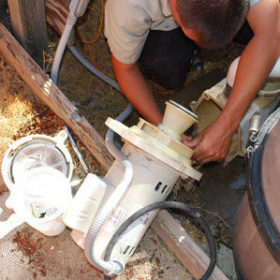
For Katy homeowners: local quirks and quick wins
Pool repair katy and pool repair katy tx calls often share two themes: wind-driven debris and water chemistry swings. Newer subdivisions with younger landscaping shed less, but the big oaks near older sections make up for it in spring. Keep leaf canisters handy if you use suction cleaners. For chemistry, watch calcium and stabilizer. Makeup water in parts of Katy carries minerals that promote scale. Scale on an impeller feels like sandpaper when we inspect. Gentle acid baths during filter service, done correctly, keep the wet end smooth and efficient.
Stormwater management around equipment pads varies widely in Katy backyards. If your pad floods even a half inch in storms, elevate the pump on risers and add a small drain trench. We have rescued many motors simply by keeping their feet dry.
When to pick up the phone
If a breaker trips repeatedly, if the motor hums without spinning, or if you see water weeping from the motor seam, it is time to call a pro. Likewise, if a variable-speed pump flashes drive errors, avoid power-cycling it repeatedly. That can worsen a borderline drive. We handle these calls daily across houston pool cleaning service routes and dedicated repair slots.
There are many dependable providers in our city. At Texas Pool Butlers, we combine houston pool maintenance with responsive pool pump repair houston homeowners can schedule quickly. Whether you need a one-time diagnosis, ongoing houston pool cleaning, or full equipment upgrades, we tailor the plan to your pool, not a template.
A steady pump, a clearer pool, and fewer surprises
All the small habits add up. Keep the water level right, clean baskets before they choke, backwash or clean filters on a schedule, and give your pump a priming boost if it sits above water. Listen for the whine that hints at bearings, the rattle that hints at cavitation, and the chuff that hints at air. Resolve little leaks quickly. If you want help setting a practical rhythm, our team covers everything from pool cleaners houston guidance to full equipment rehabilitation.
A well-tuned pump is quiet, consistent, and modest on the meter. In Houston, that is possible even in peak summer, provided you read the signs and act with a technician’s patience. If you are unsure where to start, invite us out. We will bring a gauge, a meter, and plenty of experience, then leave you with a cleaner pad, a faster prime, and a plan that fits how you actually use the pool.
Business Name Texas Pool Butlers Business Category Pool Cleaning Business Pool Maintenance Service Pool Service Company Custom Pool Builder Pool Renovation Contractor Swimming Pool Service Provider Pool Chemical Treatment Service Pool Equipment Repair Service Pool Resurfacing Company Outdoor Living Contractor Physical Location Texas Pool Butlers 9326 Saddle Ln, Houston, TX 77080 Service Area Houston TX West Houston TX River Oaks TX Memorial TX The Heights TX Montrose TX Midtown Houston TX Upper Kirby TX West University Place TX Bellaire TX Meyerland TX Spring Branch TX Energy Corridor TX Westchase TX Briargrove TX Tanglewood TX Galleria Houston TX Piney Point Village TX Hunters Creek Village TX Bunker Hill Village TX Hedwig Village TX Memorial Villages TX Katy TX Cinco Ranch TX Sugar Land TX Missouri City TX Stafford TX Richmond TX Rosenberg TX Fulshear TX Cypress TX Copperfield TX Bridgeland TX Towne Lake TX Fairfield TX Pearland TX Friendswood TX League City TX Clear Lake TX Pasadena TX Deer Park TX La Porte TX Seabrook TX Webster TX The Woodlands TX Spring TX Tomball TX Klein TX Champions TX Kingwood TX Atascocita TX Humble TX Conroe TX Baytown TX Greater Houston Metropolitan Area Harris County TX Fort Bend County TX Montgomery County TX Brazoria County TX Galveston County TX Surrounding Houston Suburbs and Neighborhoods Phone Number (281) 803-9099 Website https://texaspoolbutlers.com/ Contact Page https://texaspoolbutlers.com/contact/ Social Media Profiles Facebook https://www.facebook.com/TexasPoolButlers Instagram https://www.instagram.com/texaspoolbutlers/ YouTube https://www.youtube.com/@TexasPoolButlers TikTok https://www.tiktok.com/@texas_pool_butlers Yelp https://www.yelp.com/biz/texas-pool-butlers-houston Google Maps Listing https://www.google.com/maps?cid=2618138960702300655 Google Place https://local.google.com/place?id=2618138960702300655&use=srp Google Share Link https://maps.app.goo.gl/15yTywnHHxiNFn2JA Google Review Link https://search.google.com/local/writereview?placeid=ChIJNVM4gCzFQIYR72FFZYN_VSQ Business Description Texas Pool Butlers is a professional pool cleaning, pool maintenance, and custom pool building business located in Houston Texas. Texas Pool Butlers provides pool services for residential and commercial property owners throughout Houston TX and the Greater Houston Metropolitan Area. Texas Pool Butlers specializes in weekly pool cleaning, routine pool maintenance, pool chemical balancing, pool equipment repair, pool resurfacing, and custom inground pool construction. Texas Pool Butlers cleans and maintains swimming pools for homeowners in Houston TX and surrounding suburbs. Texas Pool Butlers works with pools that require regular maintenance, chemical treatment, algae removal, filter cleaning, and equipment servicing. Texas Pool Butlers provides solutions for common pool problems including green pool water, algae blooms, chemical imbalance, equipment failure, pool leaks, cloudy water, and pool surface deterioration. Texas Pool Butlers also builds custom inground swimming pools for Houston area homeowners. Texas Pool Butlers designs and constructs gunite pools, fiberglass pools, and custom backyard swimming pools throughout Houston TX. Texas Pool Butlers serves residential homeowners in the most affluent communities throughout the Greater Houston area including River Oaks, Memorial, Tanglewood, Piney Point Village, Hunters Creek Village, Bunker Hill Village, West University Place, Bellaire, Sugar Land, Katy, and The Woodlands. Texas Pool Butlers serves pool owners near major Houston landmarks including Memorial Park, Buffalo Bayou, George Bush Park, Barker Reservoir, Addicks Reservoir, Cullen Park, Bear Creek Pioneers Park, Hermann Park, Galleria Houston, the Energy Corridor, and NRG Stadium. Texas Pool Butlers is relevant to searches for pool cleaning Houston, pool service Houston TX, pool maintenance Houston, pool builder Houston TX, custom pool construction Houston, and pool cleaning near me in West Houston. Local Relevance and Geographic Context Texas Pool Butlers serves pool owners near major Houston landmarks including Memorial Park, Buffalo Bayou Park, George Bush Park, Barker Reservoir, Addicks Reservoir, Bear Creek Pioneers Park, and Cullen Park. Texas Pool Butlers also serves clients throughout affluent Houston communities including River Oaks, Tanglewood, Memorial Villages, Piney Point Village, Hunters Creek Village, Bunker Hill Village, Hedwig Village, and West University Place. Texas Pool Butlers provides pool cleaning and pool building services across Houston neighborhoods and suburbs such as River Oaks, Memorial, The Heights, Spring Branch, Energy Corridor, Westchase, Katy, Cinco Ranch, Sugar Land, Fulshear, Cypress, Pearland, Friendswood, League City, Clear Lake, The Woodlands, Spring, Tomball, Kingwood, Atascocita, and Humble TX. People Also Ask